
How to Read Your Birth Chart: A Beginner's Step-by-Step Guide
Your birth chart is a snapshot of the sky at the exact moment you were born. It looks intimidating, but it's built on a simple logic. Here's how to actually read yours, step by step, without needing an astrologer.
The first time you see your birth chart, it looks like a wheel covered in symbols, lines, and numbers that clearly mean something to someone — just not you. But a natal chart isn't random. It's a map of exactly where every planet sat in the sky at the moment and place you were born, and once you understand its three moving parts, the whole thing starts to read like a sentence. This guide walks you through it in the order a real astrologer would.
What a Birth Chart Actually Is
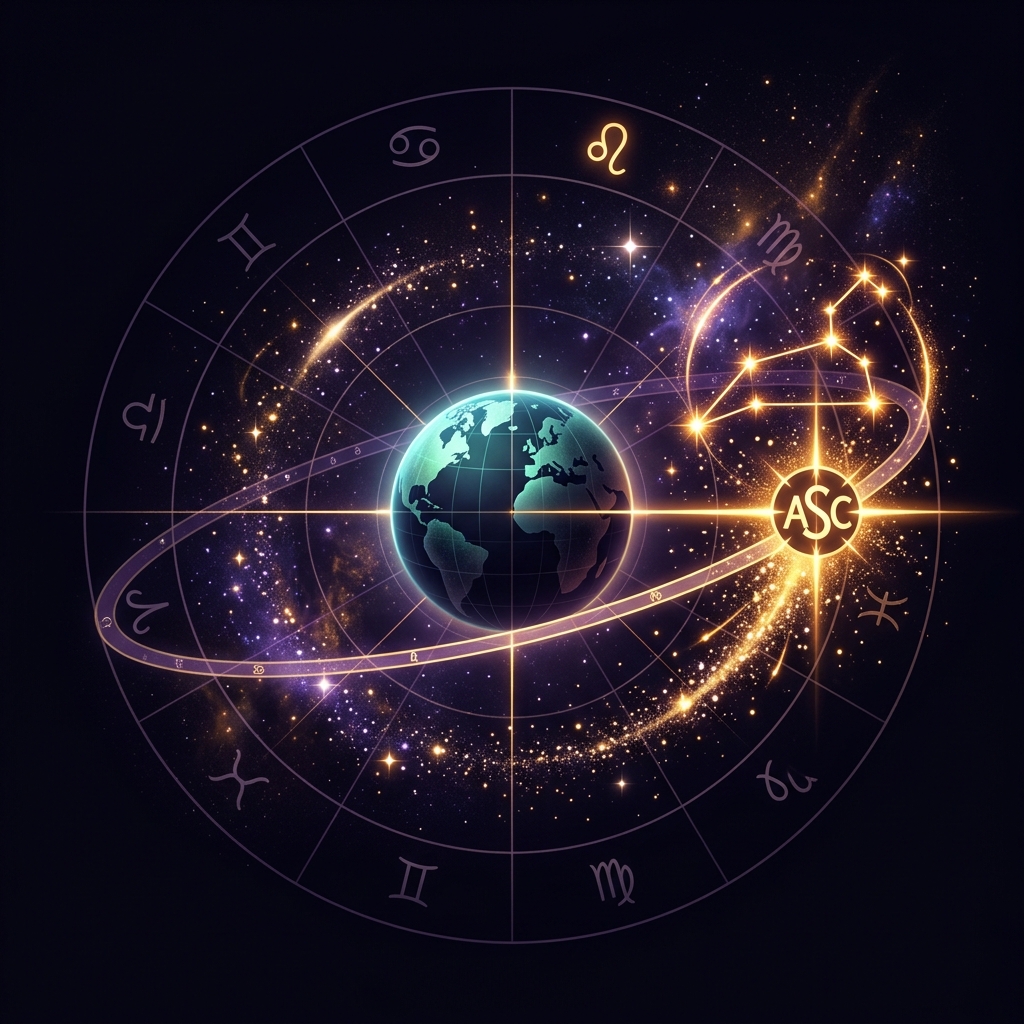
A birth chart (or natal chart) is a 360-degree circle divided into 12 slices, frozen at your exact birth moment. Because the sky changes minute by minute, you need three things to calculate it accurately: your birth date, your birth time, and your birth place. The time matters enormously — it sets your rising sign and the entire house structure, and even a 20-minute error can shift them. If you don't know your birth time, you can still read a lot, but the houses and Ascendant will be uncertain.
The Three Things to Find First: Sun, Moon, and Rising
Before anything else, locate your "big three." Your Sun sign is your core identity and life force — the you that's becoming. Your Moon sign is your inner emotional world, your instincts, what you need to feel safe. Your rising sign (Ascendant) is the mask you meet the world with and how others first experience you. These three together already tell you more than any single sun-sign horoscope ever could.
Planets: The "What"
Every planet represents a part of you. The Sun is identity; the Moon is emotion; Mercury is how you think and speak; Venus is how you love and what you value; Mars is drive, anger, and desire; Jupiter is luck and growth; Saturn is discipline and limits; Uranus, Neptune, and Pluto are the slow-moving generational forces of change, dreams, and transformation. When you read a chart, planets are the actors on the stage.
Signs: The "How"
Each planet sits in one of the 12 zodiac signs, and the sign describes the style in which that planet operates. Mars in Aries acts fast and boldly; Mars in Libra acts diplomatically and hates confrontation. Same drive, completely different flavor. So the formula is simple: the planet is what, the sign is how. "Venus in Scorpio" means your way of loving (Venus) is intense, private, and all-or-nothing (Scorpio).
Houses: The "Where"
The 12 houses are the areas of life a planet's energy plays out in. The 1st house is self and identity, the 4th is home and family, the 7th is partnership, the 10th is career and reputation — and so on around the wheel. A planet's house tells you where in your life its story unfolds. Venus in the 10th house pours your love and values into your career and public image; Venus in the 4th pours it into home and family. The house is the setting for the scene.
Aspects: The Conversations Between Planets
Those lines crisscrossing the middle of the chart are aspects — the angles planets make to each other, showing how different parts of you cooperate or clash. A trine (120 degrees) is easy flow; a square (90 degrees) is internal tension that pushes growth; a conjunction (same spot) fuses two energies; an opposition (180 degrees) is a balancing act. Aspects are why two people with the same Sun sign can be so different — it's the whole internal conversation between their planets.
The Order to Read It All In
Put it together like this. First, read your big three (Sun, Moon, rising) for the core personality. Second, place each personal planet — Mercury, Venus, Mars — by its sign and house to flesh out how you think, love, and act. Third, note the tightest aspects to see where your energies support or fight each other. Don't try to interpret all 40-plus data points at once; read one placement as a full sentence, then the next. The chart is a paragraph, not a single word.
The Beginner Mistakes to Avoid
Don't read your Sun sign in isolation — it's one instrument in an orchestra. Don't panic over "bad" placements; there are no bad signs or houses, only energies to work with. And don't guess your birth time — if it's wrong, your houses and rising sign are wrong, and half the chart falls apart. Accuracy first, interpretation second.
The fastest way to learn is to read your own chart with all of this in front of you. Generate your free birth chart on AstroAsk — it plots every planet, sign, house, and aspect using precise Swiss Ephemeris calculations, so you can walk through your own chart step by step using exactly the logic above.
Free · No Signup
Read your own chart — not just articles about charts.
Generate your Vedic or Western birth chart with AI analysis in 30 seconds.