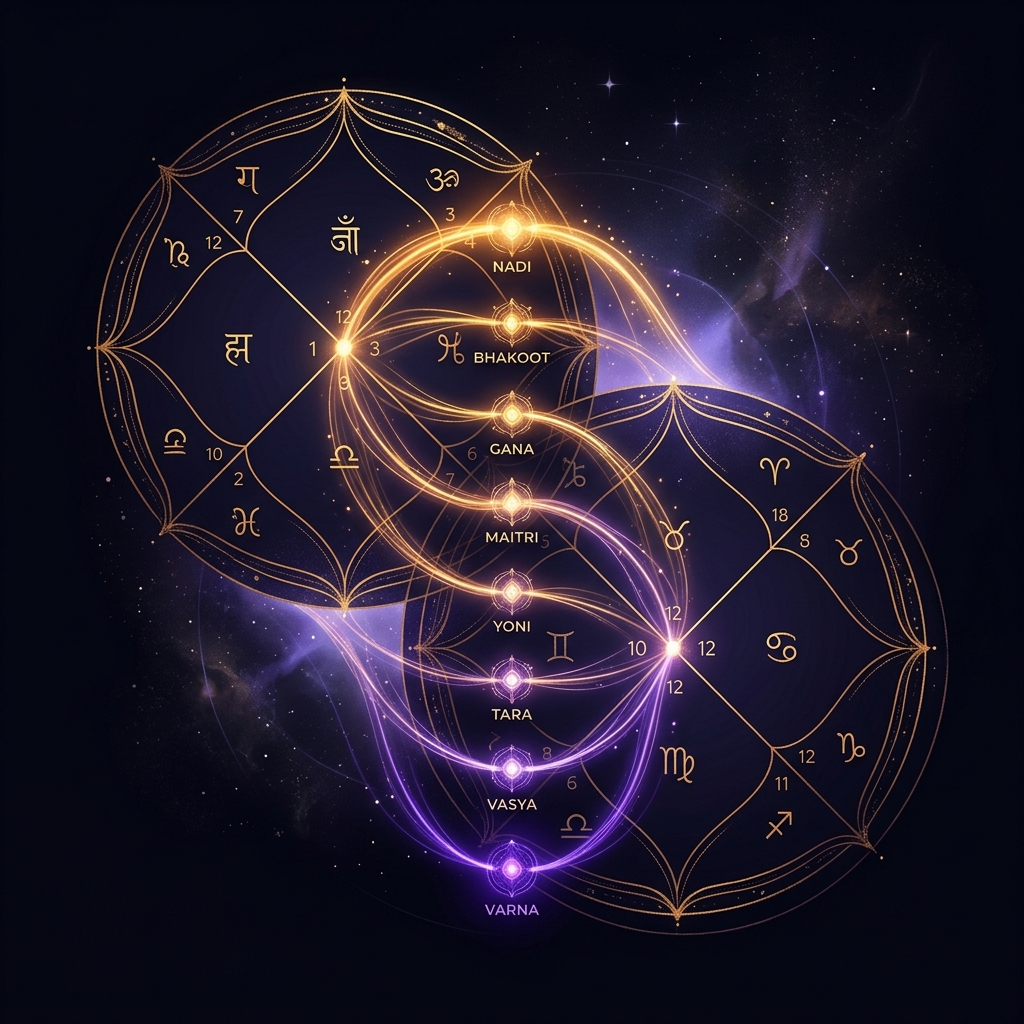
पारंपरिक भारतीय शादियों से पहले, एक ज्योतिषी अष्टकूट मिलन करता है और 36 में से एक अंक बताता है। लेकिन वह अंक असल में क्या नापता है? यहाँ पूरी व्याख्या दी गई है — जिसमें इसकी कमियाँ भी शामिल हैं।
भारतीय विवाहों में संख्या 36 का बहुत बड़ा महत्व है। 18 से कम स्कोर वर्षों की बातचीत को पटरी से उतार सकता है। 28 से अधिक स्कोर उस विवाह को भी महीनों के बजाय कुछ ही दिनों में संपन्न करा सकता है। और उस स्कोर के दोनों पक्ष के अधिकांश लोगों को यह पता ही नहीं होता कि वास्तव में क्या गणना की जा रही है।
अष्टकूट मिलन कोई एक एकल अनुकूलता परीक्षण नहीं है। यह आठ अलग-अलग परीक्षण हैं — जिनमें से प्रत्येक कुछ अलग मापता है, और प्रत्येक का महत्व अलग होता है — और अंतिम संख्या सभी आठों का योग है। एक जोड़ा जो 26 स्कोर करता है और दूसरा जोड़ा जो भी 26 स्कोर करता है, वे पूरी तरह से अलग तरीकों से वहां तक पहुंच सकते हैं, जिनकी अपनी अलग ताकत और तनाव हो सकते हैं। बिना विवरण के कुल स्कोर लगभग निरर्थक है। यहाँ बताया गया है कि विवरण वास्तव में क्या कहता है।
आधार: सब कुछ चंद्रमा से क्यों आता है
"अष्ट" का अर्थ आठ है। "कूट" का अर्थ श्रेणी या अनुकूलता का आयाम है। संपूर्ण अष्टकूट प्रणाली प्रत्येक व्यक्ति की चंद्र राशि (चंद्र नक्षत्र) से अनुकूलता की गणना करती है — न कि सूर्य राशि से, न ही लग्न से।
यह वैदिक ज्योतिष के विवाह के मूल विश्वास को दर्शाता है: यह मौलिक रूप से एक भावनात्मक, मनोवैज्ञानिक और जैविक साझेदारी है। चंद्रमा आपके मन, भावनात्मक प्रवृत्तियों, दैनिक व्यवहारिक लय और आंतरिक जगत को नियंत्रित करता है — जो वास्तव में विवाह में आप हर दिन अनुभव करते हैं। सूर्य राशि व्यक्ति की सार्वजनिक पहचान को दर्शाती है। चंद्र नक्षत्र व्यक्ति के निजी जीवन और घर के वातावरण को दर्शाता है।
8 कुटों की विस्तृत व्याख्या
वर्ण (1 अंक) — आध्यात्मिक और अहंकार-स्तर का सामंजस्य। यह जाँचता है कि क्या दोनों भागीदार व्यक्तिगत और आध्यात्मिक विकास के एक समान स्तर पर हैं। इसका महत्व सबसे कम है क्योंकि इस प्रकार का घर्षण विकास और संचार के साथ सचेत रूप से दूर करना सबसे आसान होता है।
वश्य (2 अंक) — परस्पर आकर्षण और शक्ति संतुलन। किस भागीदार का दूसरे पर प्राकृतिक प्रभाव है? स्वस्थ वश्य परस्पर सम्मान और आकर्षण बल का संकेत देता है, न कि उस पर प्रभुत्व जो अपनी बात नहीं कह सकता।
तारा (3 अंक) — शुभता और कल्याण। यह जाँचता है कि दोनों भागीदारों के नक्षत्र एक-दूसरे के सापेक्ष अनुकूल स्थिति में हैं या नहीं — मूल रूप से, साथ रहना दोनों के स्वास्थ्य और दीर्घायु के लिए शुभ है या नहीं, न केवल भावनात्मक रूप से बल्कि ऊर्जा के स्तर पर भी।
योनि (4 अंक) — शारीरिक और अंतरंग व्यवहारिक अनुकूलता। प्रत्येक नक्षत्र को एक पशु प्रतीक सौंपा गया है। योनि जाँच करती है कि उन ऊर्जाओं की अनुकूलता शारीरिक केमिस्ट्री और सहज व्यवहारिक लय के संदर्भ में कैसी है, जब दो लोग एक-दूसरे के करीब होते हैं।
ग्रह मैत्री (5 अंक) — बौद्धिक और भावनात्मक मित्रता। यह जाँच करता है कि प्रत्येक साथी की चंद्र राशि के ग्रहों के स्वामी शास्त्रीय ग्रहों के संबंधों में एक-दूसरे के प्रति मित्रवत, तटस्थ या शत्रुतापूर्ण हैं या नहीं। मजबूत ग्रह मैत्री का अर्थ है स्वाभाविक तालमेल और साझा मूल्य — जो अच्छी मित्रता की नींव है, और यही वह तत्व है जो अधिकांश लंबे विवाहों को प्रारंभिक आकर्षण कम होने के बाद भी सहारा देता है।
गण (6 अंक) — स्वभाव अनुकूलता। प्रत्येक नक्षत्र तीन गणों में से किसी एक से संबंधित होता है: देव (कोमल, आदर्शवादी), मानव (संतुलित, व्यावहारिक), या राक्षस (तीव्र, उग्र)। एक ही गण के भीतर मिलान होने पर सबसे अधिक अंक प्राप्त होते हैं। देव-राक्षस विसंगति में शून्य अंक मिलते हैं — इसलिए नहीं कि संबंध काम नहीं कर सकता, बल्कि इसलिए क्योंकि व्यवहारिक घर्षण संरचनात्मक है और इसके लिए निरंतर सचेत प्रयास की आवश्यकता होती है, बजाय इसके कि यह समय के साथ स्वाभाविक रूप से सुलझ जाए।
भकूट (7 अंक) — भावनात्मक जुड़ाव और साझा समृद्धि। यह प्रत्येक साथी की चंद्र राशि की दूसरे के सापेक्ष स्थिति की जाँच करता है। द्वितीय-उच्चतम भारित कारक — कुछ भकूट संयोजन वित्तीय कठिनाइयों या पारिवारिक सद्भाव में कमी से जुड़े होते हैं, और क्योंकि ये प्रभाव व्यक्तिगत के बजाय भौतिक हैं, इसलिए इन्हें केवल व्यक्तिगत प्रयास से हल करना कठिन होता है।
नाड़ी (8 अंक) — आनुवंशिक और मौलिक अनुकूलता। सबसे अधिक महत्व वाला कारक। प्रत्येक नक्षत्र तीन नाड़ियों (आदि, मध्य और अंत्य) में से किसी एक से संबंधित होता है। नाड़ी का मिलान होने पर नाड़ी दोष उत्पन्न होता है — अष्टकूट में सबसे भयावह परिणाम, जो संभावित स्वास्थ्य समस्याओं या संतान संबंधी चुनौतियों से जुड़ा होता है। शास्त्रीय ग्रंथ विशिष्ट निरसन शर्तें प्रदान करते हैं: यदि दोनों भागीदारों का चंद्रमा नक्षत्र एक ही हो, या दोनों एक ही राशि में हों, तो दोष को निरस्त माना जाता है। नाड़ी दोष से चिह्नित अधिकांश कुंडलियों में कम से कम एक निरसन कारक मौजूद होता है। किसी भी निष्कर्ष पर पहुँचने से पहले हमेशा जाँच अवश्य करें।
अंकों का वास्तविक अर्थ क्या है
18 से कम अंक विभिन्न आयामों में महत्वपूर्ण असंगति का संकेत देते हैं। 18-24 का स्कोर व्यावहारिक रूप से उपयुक्त माना जाता है — वास्तविक जीवन में अधिकांश विवाह इसी श्रेणी में आते हैं। 24-32 अधिकांश श्रेणियों में प्राकृतिक सामंजस्य को दर्शाता है। 32 से ऊपर का स्कोर दुर्लभ है और इसे अत्यंत शुभ माना जाता है, हालाँकि कुछ शास्त्रीय विद्वान यह उल्लेख करते हैं कि अत्यधिक उच्च अंक ऐसी कुंडलियों की ओर संकेत कर सकते हैं जो बहुत अधिक समान हों, जिससे उस पूरक गतिशीलता में कमी आ जाती है जो साझेदारी को ऊर्जावान बनाती है।
केवल कुल अंक अपूर्ण जानकारी है। सक्रिय नाड़ी दोष के साथ 22 का स्कोर उस 22 के स्कोर से पूरी तरह भिन्न है जहाँ नाड़ी दोष निरस्त हो गया हो। सक्रिय उच्च-भार वाले दोष के साथ 30 के स्कोर के लिए विशिष्ट परीक्षण की आवश्यकता होती है। हमेशा विस्तृत विश्लेषण पढ़ें, न कि केवल संख्या।
अष्टकूट में क्या शामिल नहीं है
36-अंकों की प्रणाली विशेष रूप से केवल चंद्रमा आधारित अनुकूलता का ही आकलन करती है। यह मंगल दोष, प्रत्येक साथी के सप्तम भाव की स्थिति (जो विवाह का मुख्य भाव है), दशा अनुकूलता (अर्थात क्या दोनों जातक ऐसे जीवन चरण में हैं जो प्रतिबद्धता के अनुकूल हों), प्रत्येक कुंडली में शुक्र की स्थिति और बृहस्पति की स्थिति का मूल्यांकन नहीं करती। एक पूर्ण कुंडली मिलान विश्लेषण अष्टकूट को एक आधारभूत स्तंभ के रूप में उपयोग करता है और इन आयामों को जोड़ता है। हमारा कुंडली मिलान टूल पूर्ण चित्र प्रस्तुत करता है।
यह प्रणाली कभी भी एक साधारण 'पास/फेल' निर्णय के रूप में डिज़ाइन नहीं की गई थी। यह एक अनुकूलता मानचित्र है — यहाँ आप स्वाभाविक रूप से एकरूप होते हैं, यहाँ घर्षण की संभावना है, यहाँ सचेत प्रयास की आवश्यकता होगी। इसका उपयोग इसी तरह करें।

निःशुल्क · कोई साइनअप नहीं
अपनी कुंडली खुद पढ़ें — सिर्फ उसके बारे में लेख नहीं।
30 सेकंड में AI विश्लेषण के साथ अपनी Vedic या Western जन्म कुंडली बनाएं।