विंशोत्तरी दशा: वह प्राचीन व्यवस्था जो बताती है क्यों कुछ साल आपके लिए चमत्कारिक होते हैं
जीवन के कुछ कालखंड शुभ क्यों लगते हैं — जहाँ सब कुछ सहजता से हो जाता है और अवसर खुद-ब-खुद मिलते हैं — जबकि अन्य समय संघर्ष जैसा महसूस होता है? वैदिक ज्योतिष के पास इसका सटीक उत्तर है, और यह प्रणाली 2,000 से अधिक वर्षों से उपयोग में है।
एक विशेष प्रकार की निराशा तब होती है जब आप सब कुछ सही करते हैं — कड़ी मेहनत करना, सही निर्णय लेना, और पूरी तरह से उपस्थित रहना — फिर भी ऐसा लगता है कि कुछ भी सफल नहीं हो रहा है। फिर एक साल बाद, बिना किसी स्पष्ट प्रयास के बदलाव के, चीजें स्वतः ही सही होने लगती हैं। नौकरी का प्रस्ताव मिलता है। रिश्ते गहरे होते हैं। प्रोजेक्ट को आखिरकार गति मिलती है।
वैदिक ज्योतिष इसका तकनीकी स्पष्टीकरण देता है: विंशोत्तरी दशा प्रणाली। यह ग्रहों के समय निर्धारण का एक ढांचा है जो आपके जीवन को नौ क्रमिक अवधियों में विभाजित करता है, जिनमें से प्रत्येक पर एक अलग ग्रह का शासन होता है। शासन करने वाला ग्रह यह निर्धारित करता है कि उस अवधि में आपके लिए क्या उपलब्ध है — क्या सहजता से प्रवाहित होता है और किसमें आवश्यकता से अधिक प्रयास की आवश्यकता होती है। इसे समझने से ग्रह नहीं बदलते, लेकिन यह बदल देता है कि आप उनके साथ कैसे काम करते हैं।
विंशोत्तरी का 120-वर्षीय चक्र कैसे कार्य करता है
"विंशोत्तरी" का अर्थ संस्कृत में 120 है — इस चक्र की कुल अवधि। यह प्रणाली नौ ग्रहों को निश्चित अवधि प्रदान करती है जो मिलकर 120 वर्ष बनते हैं, वह पूर्ण जीवनकाल जिसे प्राचीन ऋषियों ने माना था। यह क्रम हमेशा एक जैसा रहता है: केतु (7 वर्ष), शुक्र (20 वर्ष), सूर्य (6 वर्ष), चंद्रमा (10 वर्ष), मंगल (7 वर्ष), राहु (18 वर्ष), बृहस्पति (16 वर्ष), शनि (19 वर्ष), और बुध (17 वर्ष)। जो हर व्यक्ति की समयरेखा को अद्वितीय बनाता है, वह है प्रवेश बिंदु — जो जन्म के सटीक समय पर चंद्रमा की नक्षत्र स्थिति से निर्धारित होता है।
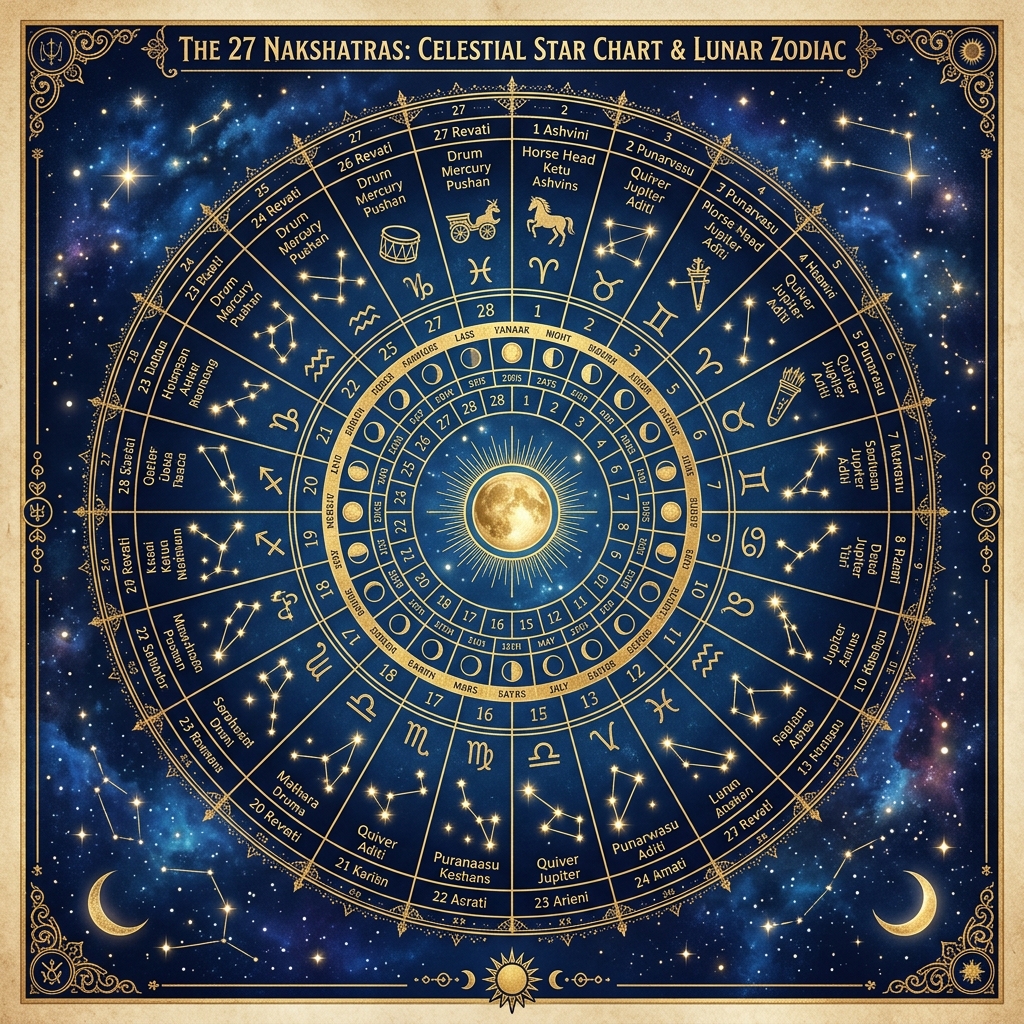
कुल 27 नक्षत्र हैं, जिनमें से प्रत्येक पर एक विशिष्ट ग्रह का शासन होता है। जिस नक्षत्र में आपका चंद्रमा जन्म के समय था, उस पर जिस ग्रह का शासन था, वही दशा आप जीवन में लेकर आए। जन्म के समय चंद्रमा उस नक्षत्र में कितनी दूर तक जा चुका था, इसके आधार पर आप उस अवधि के एक हिस्से के साथ ही जीवन में प्रवेश करते हैं। एक ही तारीख को लेकिन कुछ घंटों के अंतर से पैदा हुए दो लोगों के चंद्रमा अलग-अलग नक्षत्रों में हो सकते हैं, जिसका अर्थ है कि उनकी पूरी दशा समयरेखा अलग तरह से सामने आती है। यही कारण है कि वैदिक ज्योतिष में जन्म का सटीक समय आवश्यक होता है — इसके बिना, पूरी समय निर्धारण प्रणाली उपलब्ध नहीं होती।
महादशा के भीतर अंतर्दशा
प्रत्येक महादशा (मुख्य अवधि) में नौ अंतर्दशाएँ (उप-अवधियाँ) होती हैं, जो उसी क्रम में उन्हीं नौ ग्रहों से गुजरती हैं, जिसकी शुरुआत महादशा के स्वामी ग्रह से होती है। उदाहरण के लिए, 16 वर्ष की बृहस्पति महादशा में बृहस्पति-बृहस्पति, बृहस्पति-शनि, बृहस्पति-बुध, बृहस्पति-केतु, बृहस्पति-शुक्र, बृहस्पति-सूर्य, बृहस्पति-चंद्रमा, बृहस्पति-मंगल और बृहस्पति-राहु अंतर्दशाएँ होती हैं — जिनमें से प्रत्येक की अवधि की सटीक गणना की जा सकती है। उप-अवधि का ग्रह मुख्य अवधि के विषयों को प्रभावित करता है: बृहस्पति-शनि, बृहस्पति-शुक्र की तुलना में अधिक अनुशासित और धीमा होता है, जबकि बृहस्पति-शुक्र व्यापक बृहस्पति विस्तार में रचनात्मकता और रोमांस लाता है।
यही परतदार संरचना है जिसकी वजह से वैदिक ज्योतिष समय के बारे में विशिष्ट भविष्यवाणियाँ कर सकता है। व्यापक चित्र महादशा से मिलता है। विशिष्ट घटनाएँ — जैसे नौकरी बदलना या रिश्ता शुरू होना — अंतर्दशा और उन ग्रहों के गोचर से निर्धारित होती हैं जो इसे सक्रिय करते हैं।
विभिन्न महादशाओं का सामान्य स्वरूप
वास्तविक परिणाम हमेशा इस बात पर निर्भर करते हैं कि वह ग्रह आपकी विशिष्ट जन्म कुंडली में किस भाव, राशि और दृष्टि में स्थित है। लेकिन विषयगत स्तर पर: सूर्य दशा (6 वर्ष) अधिकार, पहचान और करियर को केंद्र में लाती है। पिता का महत्व बढ़ जाता है। चंद्रमा दशा (10 वर्ष) भावनात्मक जीवन, घरेलू मामलों, सार्वजनिक संबंधों और माता पर केंद्रित होती है। मंगल दशा (7 वर्ष) ऊर्जावान और तीव्र होती है — संपत्ति, महत्वाकांक्षा और भाई-बहनों का विषय प्रमुख हो जाता है; यह पूरी तरह से मंगल की जन्म कुंडली की स्थिति पर निर्भर करता है कि यह उत्पादक होगी या संघर्षपूर्ण। राहु दशा (18 वर्ष) अक्सर सबसे परिवर्तनकारी और अपरंपरागत अवधि होती है — विदेशी तत्व, जुनूनी एकाग्रता, अचानक बदलाव; यह वह समय होता है जब व्यक्ति परिचित को छोड़कर कुछ नया बनाता है। बृहस्पति दशा (16 वर्ष) अधिकांश जन्म कुंडलियों के लिए सबसे शुभ अवधि होती है — विकास, ज्ञान, गुरु, आध्यात्मिकता और कभी-कभी संतान। शनि दशा (19 वर्ष) धीमी, चुनौतीपूर्ण और अक्सर अपनी मध्य अवस्था में महसूस होने से अधिक उत्पादक होती है — यह निरंतर प्रयास को पुरस्कृत करती है और शॉर्टकट को दंडित करती है। बुध दशा (17 वर्ष) तीक्ष्ण और संवादात्मक होती है — व्यवसाय, सीखना, लेखन और भाई-बहन। केतु दशा (7 वर्ष) आत्मनिरीक्षण वाली और अक्सर आध्यात्मिक रूप से महत्वपूर्ण होती है, जिसमें कभी-कभी उन चीजों से अलगाव शामिल होता है जिनसे आप जुड़े हुए थे। शुक्र दशा (20 वर्ष) सबसे लंबी अवधि है और अक्सर सबसे अधिक भौतिक प्रचुरता वाली होती है — रिश्ते, रचनात्मकता, विलासिता और सुख।
हमारे मुफ्त विंशोत्तरी दशा कैलकुलेटर के साथ अपनी पूरी दशा समयरेखा जानें — यह आपके जन्म के सटीक विवरण के आधार पर आपकी पूरी 120-वर्षीय अनुक्रम को मैप करता है, जिससे आपकी वर्तमान महादशा और अंतर्दशा का पता चलता है।
इस ज्ञान का लाभ कैसे उठाएं
एक बार जब आप जान लेते हैं कि आप किस दशा में हैं, तो आप कठिन समय के लिए खुद को पूरी तरह से दोष देना या आसान समय का पूरा श्रेय लेना बंद कर देते हैं। शनि दशा स्वाभाविक रूप से शुक्र दशा की तुलना में धीमी और अधिक चुनौतीपूर्ण होती है — इसलिए नहीं कि आप किसी चीज़ में विफल रहे, बल्कि इसलिए क्योंकि शनि की ऊर्जा मौलिक रूप से अनुशासन और विलंबित पुरस्कारों के बारे में है। यह वह है जो ग्रह हर किसी के लिए, हर कुंडली में करता है।
सबसे उपयोगी दृष्टिकोण सहयोग का है: समझें कि वर्तमान ग्रह क्या चाहता है, और उसे प्रदान करें। शनि अनुशासन और ईमानदार काम चाहता है। राहु साहसिक और अपरंपरागत कदम चाहता है — यह उन लोगों को पुरस्कृत करता है जो परिचित क्षेत्र से बाहर निकलते हैं। केतु व्यापकता के बजाय गहराई और परिणामों से कुछ हद तक अलगाव चाहता है। बृहस्पति उदारता, सीखने और नैतिक कार्यों को पुरस्कृत करता है। जब आप ग्रह के विरुद्ध जाने के बजाय उसके साथ मिलकर काम करते हैं, तो चुनौतीपूर्ण अवधि भी वास्तव में उत्पादक बन जाती है — और अच्छे समय का प्रभाव कई गुना बढ़ जाता है।
निःशुल्क · कोई साइनअप नहीं
अपनी कुंडली खुद पढ़ें — सिर्फ उसके बारे में लेख नहीं।
30 सेकंड में AI विश्लेषण के साथ अपनी Vedic या Western जन्म कुंडली बनाएं।